






























New X Feature Exposes Key Profile Details

X has begun introducing a new section on user profiles called “About This Account,” a feature that quietly adds context about how an account was created and how it has behaved over time. Instead of relying on hunches or surface-level signals, users will now be able to see concrete information that can help them judge whether a profile feels legitimate or manufactured. The timing makes sense: with AI-generated accounts increasing, blind trust is becoming a luxury.
What Users Will Now See
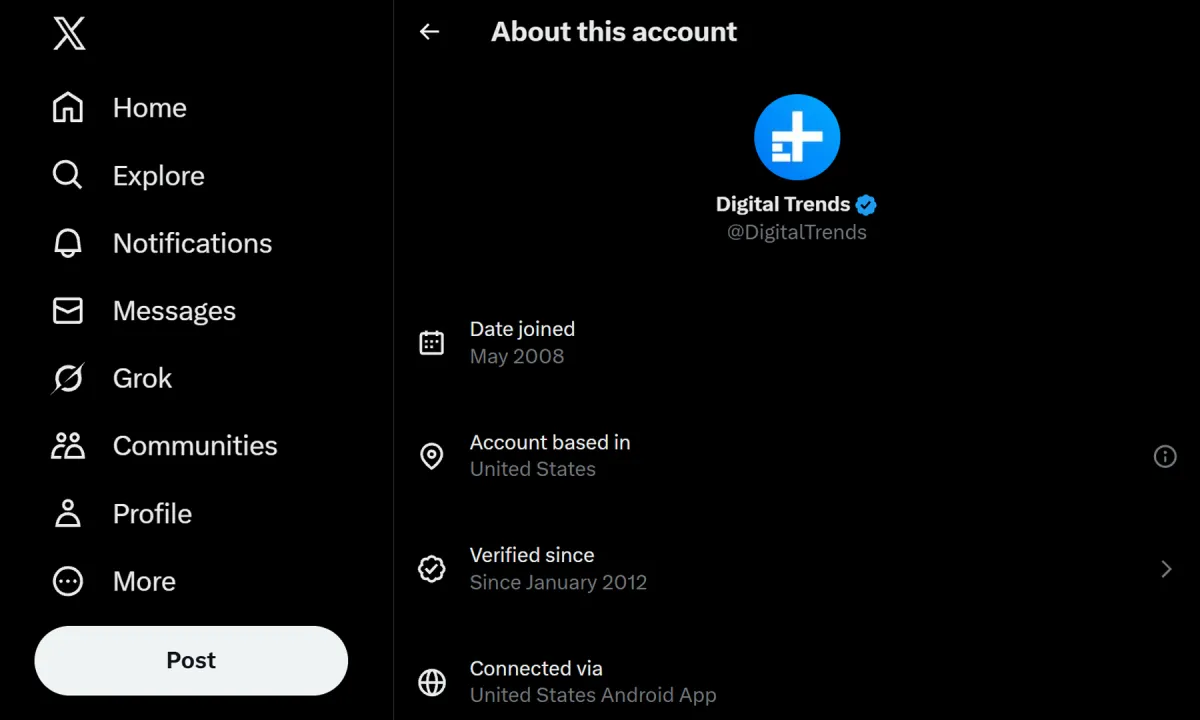
When the feature appears on an account, tapping the join date opens a page that shows where the account is based, how many times the username has been changed, when the last change happened, and how the X app was originally downloaded. None of this is dramatic on its own, but together it forms a picture of how stable or suspicious an account might be.
The idea is straightforward: someone claiming to be from one place while their account is registered somewhere entirely different deserves a second look. The same goes for profiles that constantly rename themselves.
How the Rollout Began
The first hints of the feature surfaced back in October when Nikita Bier, X’s head of product, said he would trial the details on his own profile before expanding it to employees and, eventually, regular users.
Last weekend, when a user pushed Elon Musk to require location display, Bier replied, “Give me 72 hours.” And sure enough, people started noticing the new panel appearing shortly after.
Limited Visibility — For Now
Not everyone can view the information on other users’ profiles yet. That seems intentional. X appears to be giving people the chance to review and adjust what’s shown before exposing it to the wider platform. Users can choose whether the profile displays their specific country or a broader region, an option that is available even in markets without political speech concerns.
There is also evidence, found by a reverse engineer digging through the app, that X is testing a warning label for accounts using VPNs. If it ships, it will simply tell others that the displayed location may not reflect reality.
Conclusion
X isn’t the first platform to offer this kind of transparency — Instagram has had a similar tool for years — but for a service that has long struggled with identity spoofing and bot-driven narratives, this is a meaningful shift. Whether it genuinely improves authenticity or just adds a thin layer of accountability will depend on how widely and consistently the feature is deployed.
Related Posts

Instagram Has a New Look — But Does It Really Matter to Creators?