






















Meta Adds Indian Languages to Reels AI Translation

Not every Instagram update deserves attention. This one does. Meta has quietly expanded AI-powered translations for Reels, adding five Indian languages—and for creators, this could change how far their content travels. Language has always been a hidden wall on social media. If people don’t understand what you’re saying, they scroll past. This update removes that barrier in a very real way.
It’s less about technology and more about being heard.
What Meta Has Added to Reels
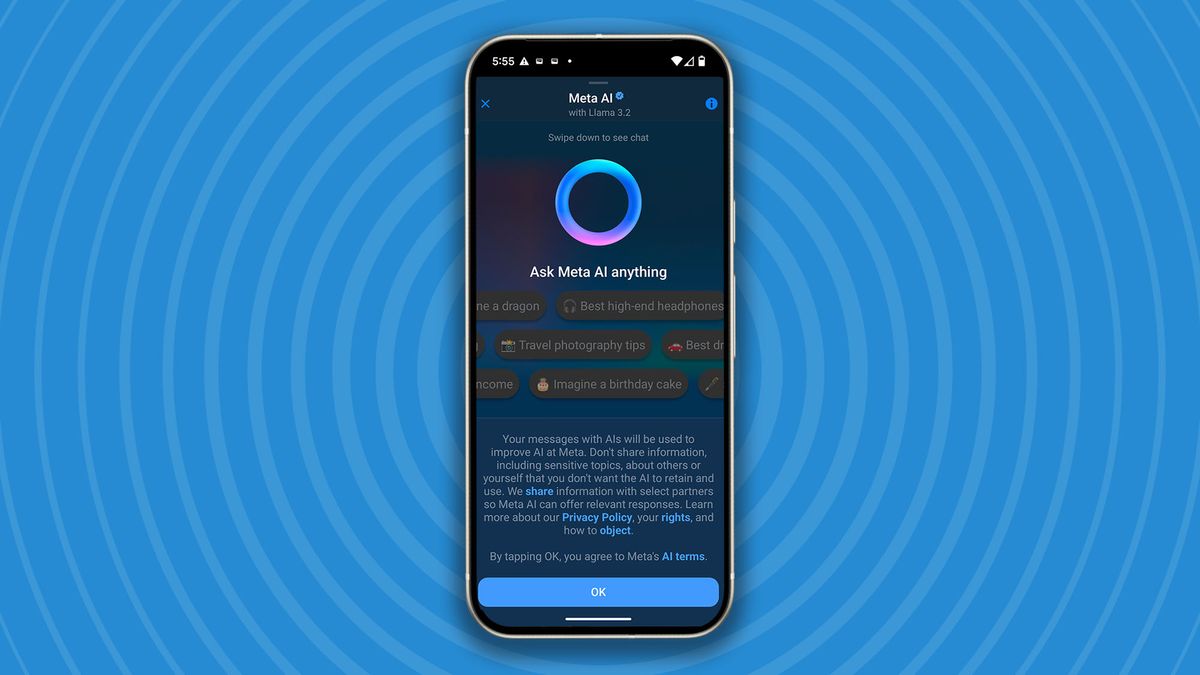
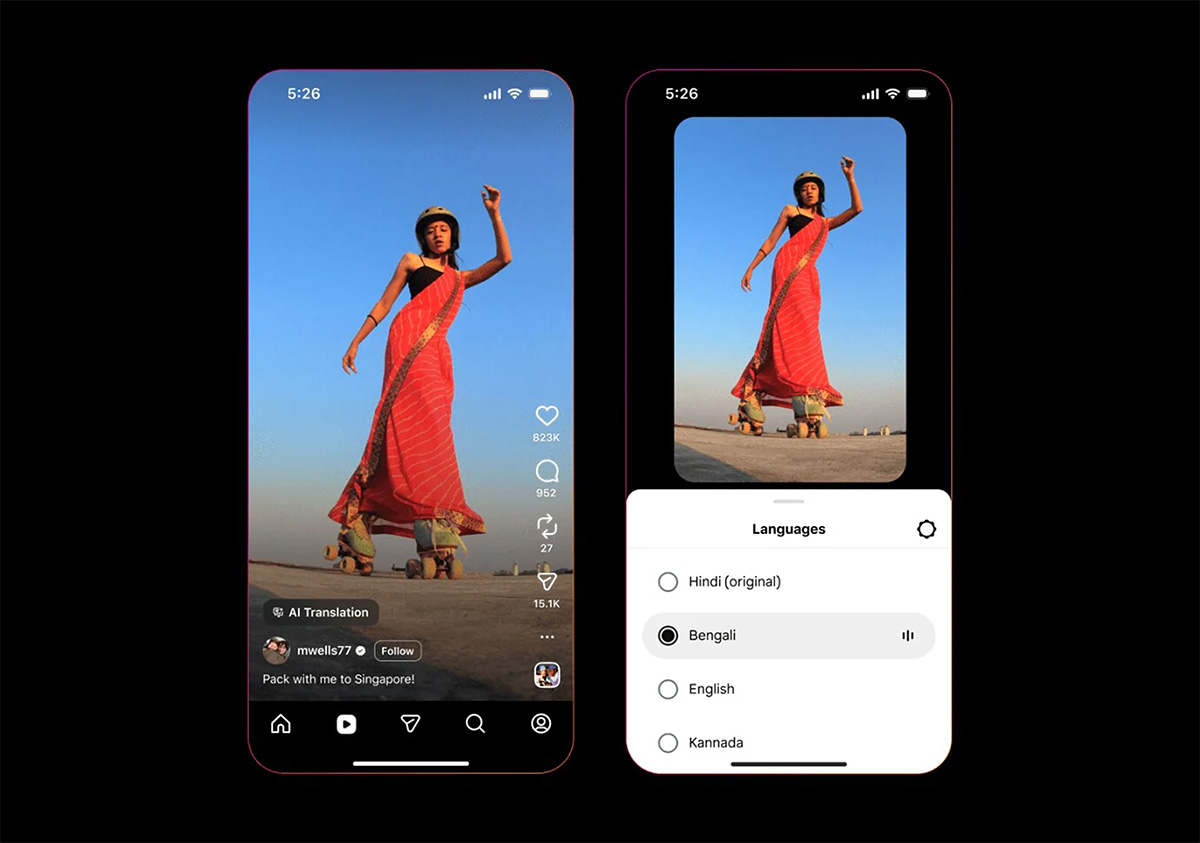
Instagram now supports AI translations in Bengali, Tamil, Telugu, Marathi, and Kannada, along with English, Hindi, Spanish, and Portuguese.
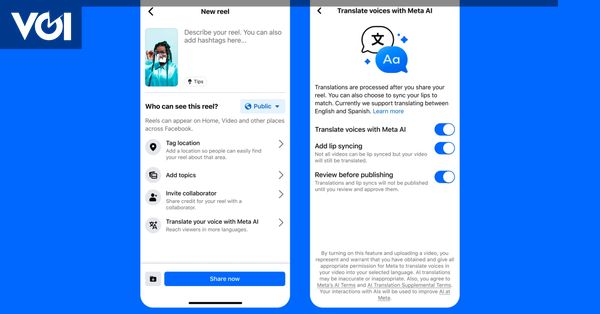
This isn’t just subtitle translation. The AI recreates the creator’s voice and tone and syncs lip movement with the translated audio. To viewers, it doesn’t feel like translated content, it feels native.
Why India Is the Focus Here
India is Meta’s largest user base, bigger than the U.S. on both Facebook and Instagram. Most users consume content in regional languages, not English. Until now, a lot of global Reels simply never reached them.
With this update, creators can appear in regional feeds without changing how they create content. That’s a big shift.
Two Practical Benefits for Creators
Better Retention
When people understand content immediately, they stay longer. No reading subtitles. No guessing context. Just clear communication.
Stronger Distribution
Higher watch time and engagement send better signals to Instagram’s algorithm. That means more reach, often beyond your usual audience
Who Can Use This Feature
To enable AI translations:
•Turn on Professional Mode or use a Page
•Have at least 1,000 followers+
•Be in a region where Meta AI is available
Conclusion: Reach Isn’t Just About Algorithms Anymore
Creators often talk about shadow bans, timing, and trends. But language has been one of the biggest limits all along. Meta’s AI translation update removes that excuse. Content can now move across regions without losing its personality.
Creators who use this early will grow faster and wider. The rest will catch on later—after the reach has already shifted.
Related Posts
Why Choose Ytviews.in for Instagram Followers?
Instagram Creator Tools – Now Available for Public Accounts